
A denied insurance claim may look like a small administrative issue.
In reality, it can delay payments for weeks, frustrate billing staff, and quietly drain thousands of dollars from a medical practice every single month.
And here's what most people don't say out loud:
Most claim denials don't happen because staff are careless. They happen because billing systems are overloaded with constantly changing payer requirements.
According to the American Medical Association (AMA), physicians and their staff spend an average of two business days per week just managing prior authorizations and billing paperwork.
That's time that should be spent on patients.
This is exactly where AI medical billing software powered by generative AI is making a real difference. Not as a buzzword. As a practical tool that catches coding mistakes, flags incomplete documentation, and helps practices get paid faster.
Let's break down how it works and what healthcare organizations need to know before adopting it.
Traditional Billing vs. AI-Powered Billing: A Quick Comparison
| 📋 Traditional Billing | 🤖 AI Powered Billing |
|---|---|
| Manual code lookup by billing staff | Automated ICD-10 and CPT code suggestions |
| Errors caught after claim denial | Errors flagged before submission |
| Slow appeals process manual drafting | AI assisted appeal letters generated in minutes |
| High denial rates (10 to 15% average) | Denial rates reduced by up to 40% |
| Staff time wasted on repetitive tasks | Staff freed to focus on complex cases |
| Difficult to scale without hiring more staff | Scales easily as claim volume grows |
What Is Generative AI and What Does It Actually Do in Billing?
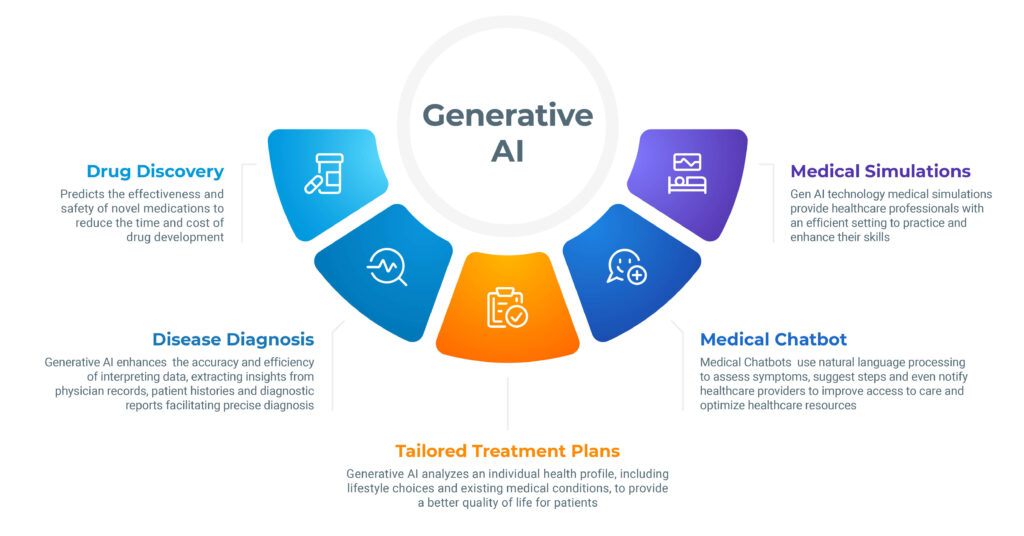
Generative AI isn't just automation. It's a type of artificial intelligence that can read, interpret, and generate content based on what it learns from large datasets.
In the context of medical billing automation, that means it can:
- Read a physician's clinical notes and suggest the correct billing codes
- Detect missing documentation before a claim goes out
- Learn payer-specific rules and apply them automatically
- Draft prior authorization requests and denial appeal letters
Think of it less like a robot and more like a very experienced billing reviewer one that never gets tired, never misses a line, and gets smarter with every claim it processes.
Tools like Optum's AI-powered claims solutions, Athenahealth's billing intelligence platform, and Epic Systems' revenue cycle tools are already using this technology at scale across thousands of healthcare organizations.
The Real Cost of Coding Mistakes in Healthcare
Here's something worth understanding before we go further.
Even small billing mistakes can delay payments for weeks. A single wrong digit in an ICD-10 code, a missing modifier, or an undocumented diagnosis can send an entire claim back to square one.
According to CMS (Centers for Medicare & Medicaid Services), improper payments in the U.S. healthcare system totaled over $100 billion in a single year a significant portion tied directly to coding and documentation errors.
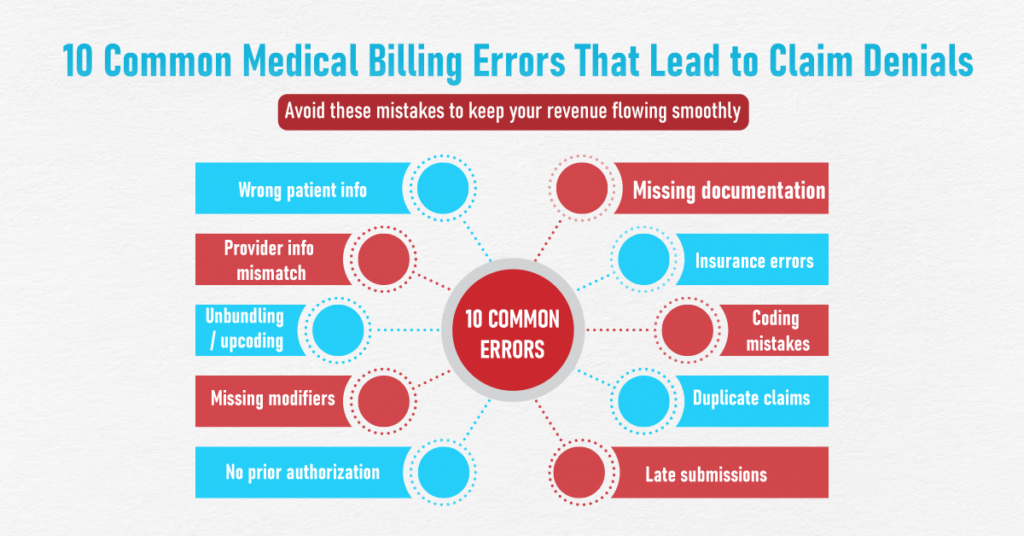
For a mid-sized practice, common reimbursement delays stem from:
- Upcoding or downcoding: Wrong codes that don't match the actual service provided
- Duplicate submissions: The same claim filed more than once
- Missing patient data: Incorrect insurance ID, date of birth, or policy number
- Unbundling: Splitting services that should be billed together
- No proof of medical necessity: Claims submitted without supporting clinical records
Each reworked claim costs between $25 and $118 to reprocess. For a practice handling 500 claims a month with a 12% denial rate, that's a significant amount of wasted time and money every single month.
How AI in Healthcare Billing Actually Fixes These Problems
Let's get specific. Here's where AI in healthcare billing makes a measurable difference:
1. It Reads Clinical Notes So Billers Don't Have To
Physicians write notes for clinical clarity not for billing compliance. Those two priorities don't always align.
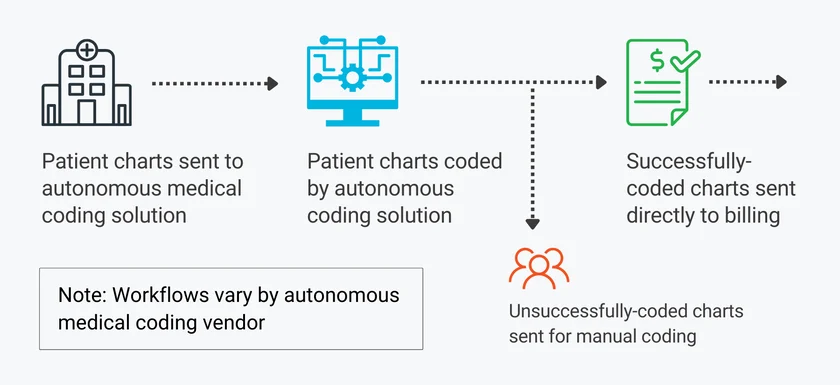
Generative AI uses Natural Language Processing (NLP) to read unstructured clinical text and extract the correct ICD-10 and CPT codes automatically.
It doesn't just match keywords. It understands context. A fractured wrist treated with a cast gets coded differently than one treated surgically and the AI knows that.
2. It Catches Errors Before Claims Are Submitted
Legacy claim scrubbing tools check formatting. That's it.
AI-powered claim scrubbing goes much further. It cross-references:
- Payer-specific billing rules
- Current CMS coding guidelines
- The actual clinical documentation
- Prior authorization requirements
The result? Revenue cycle issues get caught at the source not weeks later when a denial letter arrives.
3. It Handles Prior Authorization More Efficiently
Prior authorization is one of the most time-consuming parts of the billing process.
AI tools can predict which procedures will require authorization, flag missing approvals before claims are filed, and even draft the authorization request based on clinical notes reducing the back-and-forth that normally takes days.
4. It Drafts Denial Appeals Fast
When a claim is denied, a billing specialist might spend an hour or more researching the reason and drafting an appeal.
With intelligent billing systems, that process takes minutes. The AI analyzes the denial reason, pulls in relevant documentation, and generates a structured appeal letter ready for review.
About the Author
Zanvy Smart Team
The Samplify Editorial Team brings together certified healthcare billing specialists, revenue cycle management (RCM) experts, and AI technology analysts with over 10+ years of combined experience in U.S. healthcare. Our content is thoroughly researched, reviewed for compliance with current CMS guidelines, and written to meet the highest standards of E-E-A-T.
Hi, just wanted to tell you, I loved this blog post.
It was helpful. Keep on posting!
Hello, always i used to check weblog posts here in the early hours in the
morning, because i love to gain knowledge of more and more.
Nice post. I used to be checking constantly this weblog and I’m
inspired! Extremely helpful info specially the last section 🙂 I maintain such info a lot.
I was seeking this particular information for a long time.
Thank you and good luck.